
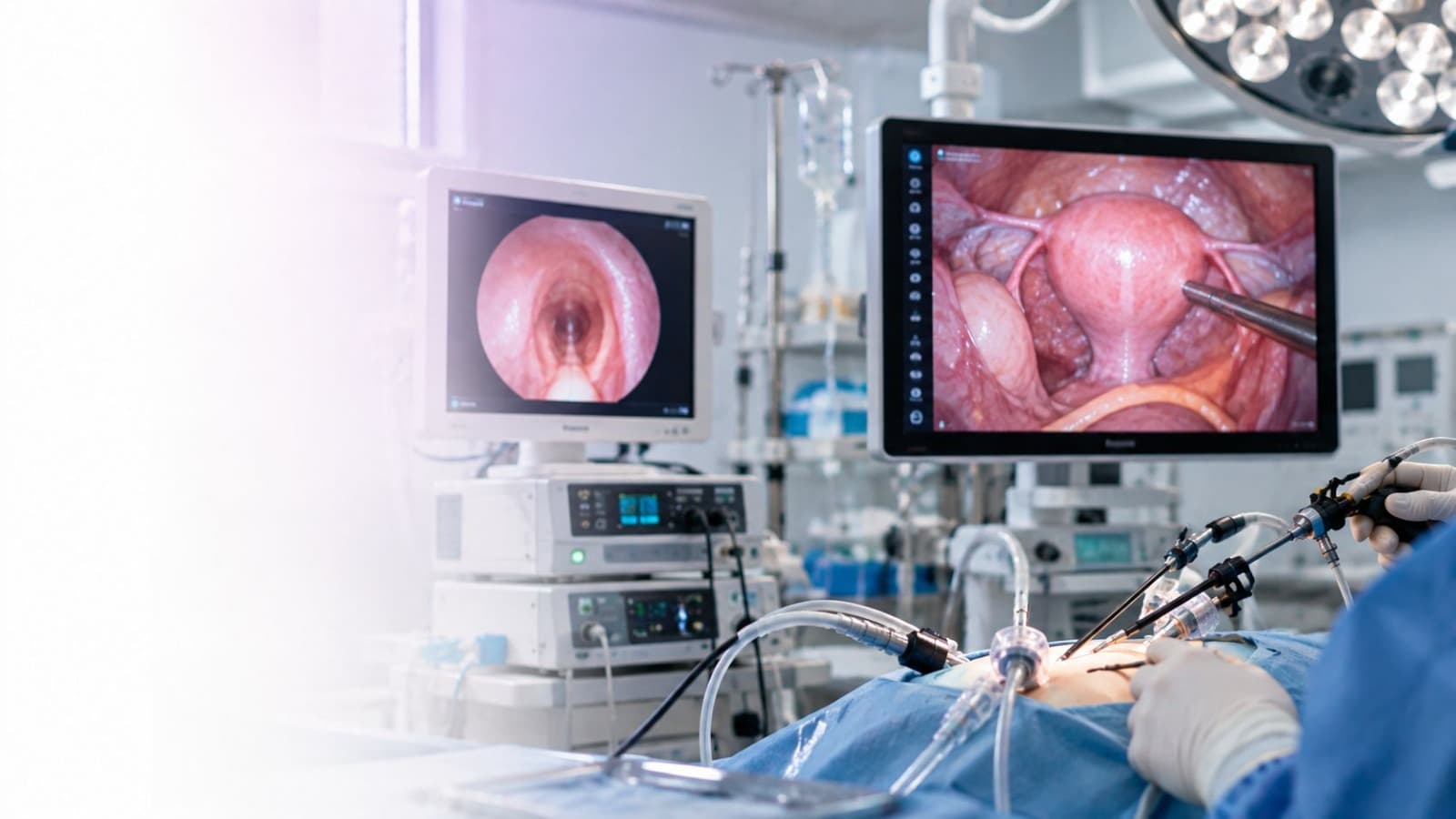
What Is Gynecological Endoscopy?
Gynecological endoscopy is a minimally invasive procedure that uses a thin, lighted camera to examine and, when necessary, treat conditions affecting the female reproductive organs. The two main procedures are hysteroscopy, which examines the inside of the uterus through the vagina and cervix, and laparoscopy, which examines the pelvic organs through small abdominal incisions.
Types of Gynecological Endoscopy
Hysteroscopy
Hysteroscopy allows direct examination of the inside of the uterus using a thin instrument called a hysteroscope.
It may be recommended when symptoms or investigations suggest a condition involving the uterine cavity.
Depending on the findings, hysteroscopy may be used to:
- Investigate certain causes of abnormal uterine bleeding.
- Assess suspected endometrial polyps.
- Examine submucosal fibroids.
- Identify intrauterine adhesions.
- Assess selected structural abnormalities of the uterine cavity.
Some conditions can be treated during the procedure, depending on their characteristics and the equipment available.
Hysteroscopy does not require abdominal incisions.
Laparoscopy
Laparoscopy is a minimally invasive surgical approach involving a small camera and instruments introduced through abdominal incisions.
It allows examination of pelvic structures such as the uterus, ovaries, fallopian tubes and surrounding tissues.
Laparoscopy may be considered for selected conditions, including:
- Suspected endometriosis requiring surgical evaluation.
- Certain ovarian cysts.
- Pelvic adhesions.
- Selected fallopian tube conditions.
- Some uterine fibroids requiring surgical management.
Laparoscopy is usually performed under general anesthesia.
The procedure and any additional surgical treatment depend on the patient's diagnosis and clinical circumstances.
Gynecological Endoscopy Process
- 1
Specialist Consultation
Your gynecologist reviews your symptoms and investigations to determine whether hysteroscopy, laparoscopy or another approach is appropriate.
- 2
Pre-Procedure Assessment
If a procedure is recommended, the team explains the required preparation, anesthesia or pain-relief options, and relevant investigations.
- 3
Endoscopic Examination or Treatment
The specialist performs the agreed procedure. The technique, operating time and need for anesthesia depend on whether hysteroscopy or laparoscopy is being performed and the complexity of the intervention.
- 4
Recovery and Observation
Following the procedure, patients are monitored according to the anesthesia used and the extent of treatment. Some procedures may allow same-day discharge, while others require a longer hospital stay.
- 5
Results and Further Management
Your specialist discusses the findings and whether additional treatment, medication or follow-up is needed. If a tissue sample has been collected, further management may depend on laboratory examination.
Conditions Treated With Gynecologic Endoscopy
Endometriosis and endometriomas
Laparoscopy can confirm and remove endometriosis when imaging and medicines have not given an answer or relief.
Ovarian cysts
Persistent or symptomatic cysts can be removed laparoscopically while preserving healthy ovarian tissue.
Uterine fibroids
Fibroids inside the cavity are removed by hysteroscopy; fibroids in the wall or outside may need laparoscopy.
Endometrial polyps
Removed by hysteroscopy, usually as a short day procedure.
Blocked or damaged fallopian tubes
Laparoscopy checks tubal openness with dye and can treat adhesions or remove a badly damaged, fluid-filled tube before IVF.
Intrauterine adhesions (Asherman's syndrome)
Scar tissue inside the uterus is divided hysteroscopically.
Unexplained infertility or recurrent miscarriage
In selected cases, endoscopy looks for problems that scans cannot show.
Ectopic pregnancy
Laparoscopy is the usual surgical approach when an ectopic pregnancy needs an operation.
Why Choose Angel for Gynecological Endoscopy?
At Angel Fertility Clinic, we provide specialist-led gynecological endoscopy with personalised, fertility-focused care.
Experienced Gynecological Endoscopy Specialists
Our medical team includes gynecologists with expertise in hysteroscopy, laparoscopy, and minimally invasive gynecological surgery for selected reproductive health conditions.
Careful Assessment Before Surgery
Not every gynecological condition requires surgery. Our specialists review your symptoms, medical history, and diagnostic findings to determine whether endoscopic evaluation or treatment is appropriate.
Fertility-Conscious Treatment Planning
For patients planning pregnancy, our specialists consider reproductive goals when discussing surgical options and their potential effects on future fertility.
Clear Guidance on Treatment Options
We focus on helping you understand the purpose of a recommended procedure, its potential benefits, associated risks, and available alternatives before making a treatment decision.
Integrated Gynecology and Fertility Care
Our gynecological endoscopy services are supported by reproductive health and fertility consultations, allowing surgical findings to inform further assessment or fertility treatment planning when appropriate.