What Is Recurrent Implantation Failure?
Recurrent implantation failure (RIF) refers to repeated unsuccessful embryo transfers during IVF despite transferring embryos with a reasonable chance of implantation. There is no single fixed number of failed transfers that defines RIF for every patient. Instead, it is assessed individually based on factors such as age, embryo quality, whether embryos were genetically tested, and the outcome of previous IVF cycles.
What Can Cause Recurrent Implantation Failure?
Recurrent implantation failure does not always have one identifiable cause. In some patients, embryo, uterine or treatment-related factors may contribute, while in others repeated failure may occur despite no clear abnormality being found.
Recurrent Implantation Failure Treatment Options
There is no single treatment for recurrent implantation failure. Treatment depends on what is identified after reviewing previous IVF cycles, embryos, the uterine cavity and other relevant factors. In some patients, a specific problem can be treated; in others, another carefully planned embryo transfer may be the appropriate next step.
Treating Uterine or Tubal Problems
If evaluation identifies a problem affecting the uterine cavity, such as an endometrial polyp, submucosal fibroid, intrauterine adhesion or other relevant structural abnormality, treatment may be considered before another embryo transfer. Hysteroscopy can be used both to examine the uterine cavity and, in selected cases, treat abnormalities found during the procedure.
Treating Chronic Endometritis
If chronic endometritis is confirmed, antibiotic treatment may be considered. However, antibiotics are not routinely recommended simply because embryo transfers have failed, and treatment should be based on appropriate evaluation.
Reviewing Embryos and Genetic Factors
Previous embryo development, quality and genetic testing should be reviewed. PGT-A may be discussed when previous embryos were untested, particularly when embryo chromosome abnormalities are a concern, but it has not been proven to increase live-birth rates specifically in patients with RIF. If a structural chromosome rearrangement is identified in either parent, genetic counselling and PGT-SR may be considered.
Reviewing Endometriosis or Adenomyosis
When endometriosis or adenomyosis is present or suspected, treatment before another embryo transfer may be considered based on the individual patient's findings and treatment history. Current evidence does not support one treatment approach for every patient with RIF.
Reviewing the Embryo Transfer Plan
The fertility specialist should review factors such as embryo-transfer technique, endometrial preparation and progesterone support from previous cycles. These may influence how the next transfer is planned, although there is currently no single progesterone protocol proven specifically for RIF.
When No Correctable Cause Is Found
Sometimes a detailed review finds no specific abnormality that requires treatment. In this situation, extensive additional testing or treatment may not improve the chance of success, and proceeding with another appropriately planned embryo transfer can be reasonable.
Related but different
Recurrent Implantation Failure vs Recurrent Miscarriage
These are related but different reproductive problems.
| Feature | Recurrent Implantation Failure | Recurrent Miscarriage |
|---|---|---|
| Pregnancy starts? | Usually no positive pregnancy test | Pregnancy has begun |
| Main context | IVF/embryo transfer | Natural or assisted conception |
| Key event | Embryo does not establish detectable implantation | Pregnancy implants but is subsequently lost |
| Evaluation | Embryo, IVF cycle, transfer and uterine factors | Pregnancy loss, genetics, uterus, APS and other indicated factors |
Is Recurrent Implantation Failure the Same as a Failed IVF Cycle?
No. A complete IVF cycle can fail at several different stages.
If previous cycles did not reach embryo transfer, those cycles do not represent implantation failure. This distinction is important because the investigations needed after poor fertilisation or poor embryo development are different from those considered after repeated embryo-transfer failure.
Learn About IVFA complete IVF cycle can fail at several different stages:
- The ovaries may respond poorly to stimulation.
- Few or no mature eggs may be retrieved.
- Fertilisation may not occur.
- Embryos may stop developing.
- No embryo may be suitable for transfer.
- An embryo may be transferred but pregnancy does not occur.
- Pregnancy may begin but subsequently be lost.
Recurrent implantation failure refers specifically to repeated lack of implantation after embryo transfer.
Why Choose Angel for Recurrent Implantation Failure?
Individual Review of Previous IVF Cycles
Repeated implantation failure should not automatically lead to more tests or another standard IVF cycle. At Angel Fertility Clinic, your previous embryo transfers, treatment history and relevant investigations can be reviewed to help determine what should be considered next.
Fertility Specialists and Embryologists Working Together
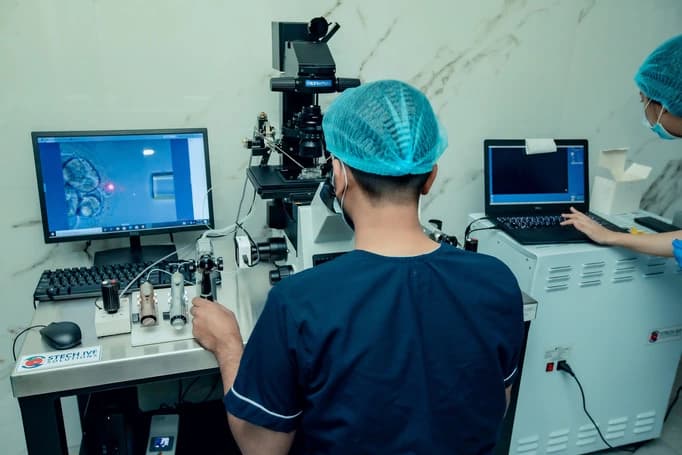
RIF involves both the clinical and embryology sides of IVF. Angel brings fertility specialists and experienced embryologists together, allowing embryo development, previous transfer history and medical findings to be considered as part of the same treatment plan.
In-House Diagnostics and Genetic Support
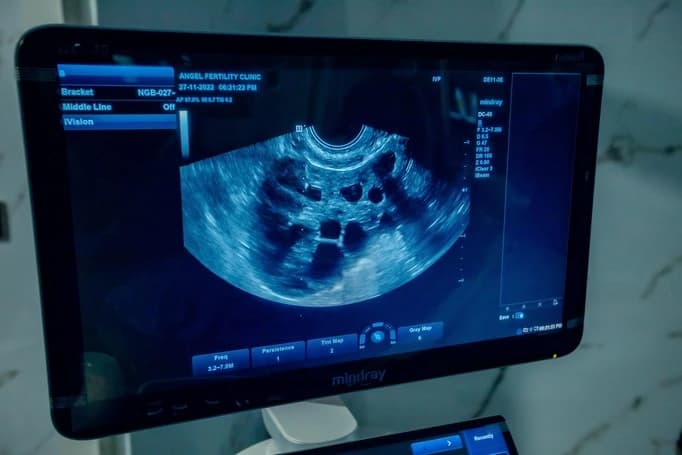
Angel provides reproductive diagnostics, ultrasound, fertility testing and access to genetic testing within its fertility care pathway. This helps investigations focus on factors that may actually be relevant to your implantation history.
Individualised, Evidence-Based Treatment Planning
There is no single treatment for every patient with RIF. The next step may involve treating an identified problem, adjusting the IVF or embryo-transfer strategy, discussing appropriate genetic testing, or proceeding with another carefully planned transfer when no correctable cause is found.







Our Treatments
Explore fertility treatments that may be considered after a review of your previous IVF cycles, embryos and uterine health.